
By: Allison Shaffer
Zen4Blue Ocean Research Author
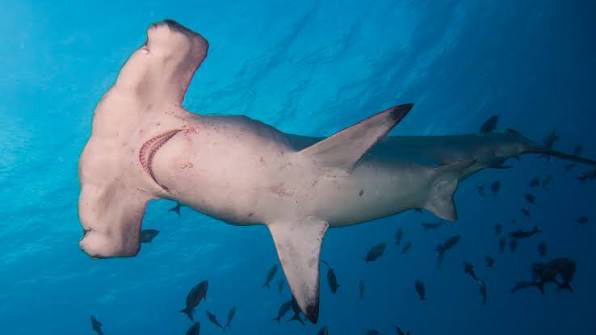
There is something almost otherworldly about a hammerhead shark. The first time most people see one, whether in a photograph or documentary, their reaction is usually the same: That can’t be real.
With their unmistakable hammer-shaped heads and graceful movements, hammerheads are among the most recognizable sharks in the ocean. Yet despite their unusual appearance, these incredible animals are far more than a curiosity of evolution.
Hammerhead sharks belong to the genus Sphyrna, which includes several species ranging from the small bonnethead to the impressive, great hammerhead. Their unique head shape, called a cephalofoil, serves an important purpose. It provides enhanced sensory capabilities, allowing them to detect prey hidden beneath the sand and giving them exceptional depth perception.
These sharks are highly skilled hunters, often feeding on fish, squid, octopus, and stingrays. In fact, great hammerheads are known for their remarkable ability to hunt stingrays, using their broad heads to pin them to the ocean floor.
One of the most fascinating behaviors seen in hammerheads is their tendency to form large schools. While many shark species are solitary, scalloped hammerheads can gather in groups numbering in the hundreds. Watching these schools move through the blue water is one of the ocean’s most breathtaking sights.
Unfortunately, hammerhead sharks face significant threats. Overfishing, habitat degradation, and the shark fin trade have contributed to population declines worldwide. Several hammerhead species are now listed as endangered or critically endangered, making conservation efforts more important than ever.

Hammerheads remind us that nature doesn’t always fit into the neat categories we create. Sometimes the most unusual creatures are the ones perfectly adapted to thrive in their environment. Their story is a powerful reminder that being different isn’t a weakness, it’s often a strength.
The next time you see a hammerhead shark, look beyond its unusual appearance. What you’ll find is one of the ocean’s most remarkable predators, a species that plays a vital role in maintaining healthy marine ecosystems and deserves our protection.